2021-12-09 ZOOM-Universe
Software for the Past (SfP 2021)
Epidat
names, dates, places
git – abstract
slides https://digicademy.github.io/SFP2021
use spacebar to navigate slides
Thomas
Kollatz
Digital Academy@Akademie der
Wissenschaften und Literatur | Mainz
 @kol_t
CC-BY
4.0
@kol_t
CC-BY
4.0
epidat – development
- 2002 set up as a database in order to manage the inventarisation of about 6.000 headstones from the Ashkenazic Cemetery in Hamburg-Altona (1621-1871)
- data ingest by a team of 10-12 researchers (server based via webforms)
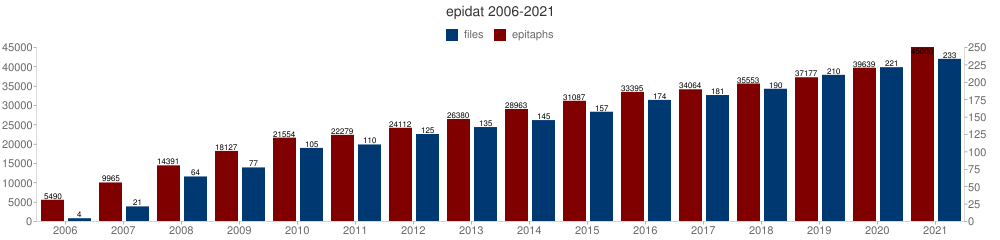
- since 2006 online
- many projects followed – the ongoing development of epidat is driven by projects and scientific cooperations
- since 2019 epidat is developed in a scientific cooperation between Steinheim-Institute | Essen and Academy of Science and Literature | Mainz
| FAIR | Epidat Research data are ... |
|---|---|
| Findable | provided for human readers via html5, provided via a machine readable interface |
| Accesible | provided in the standard format EpiDoc: TEI XML for Epigraphic Documents for machine readable, system-independent, program-independent and structured access (and widely used by digital epigraphers) |
| Interoperable | mapped to authority files, controlled vocabularies and thesauri to maintain interoperability |
| Re-usable | released online under an open Creative Commons Licence cc-by |
| for more information see also How to harvest epidat records |
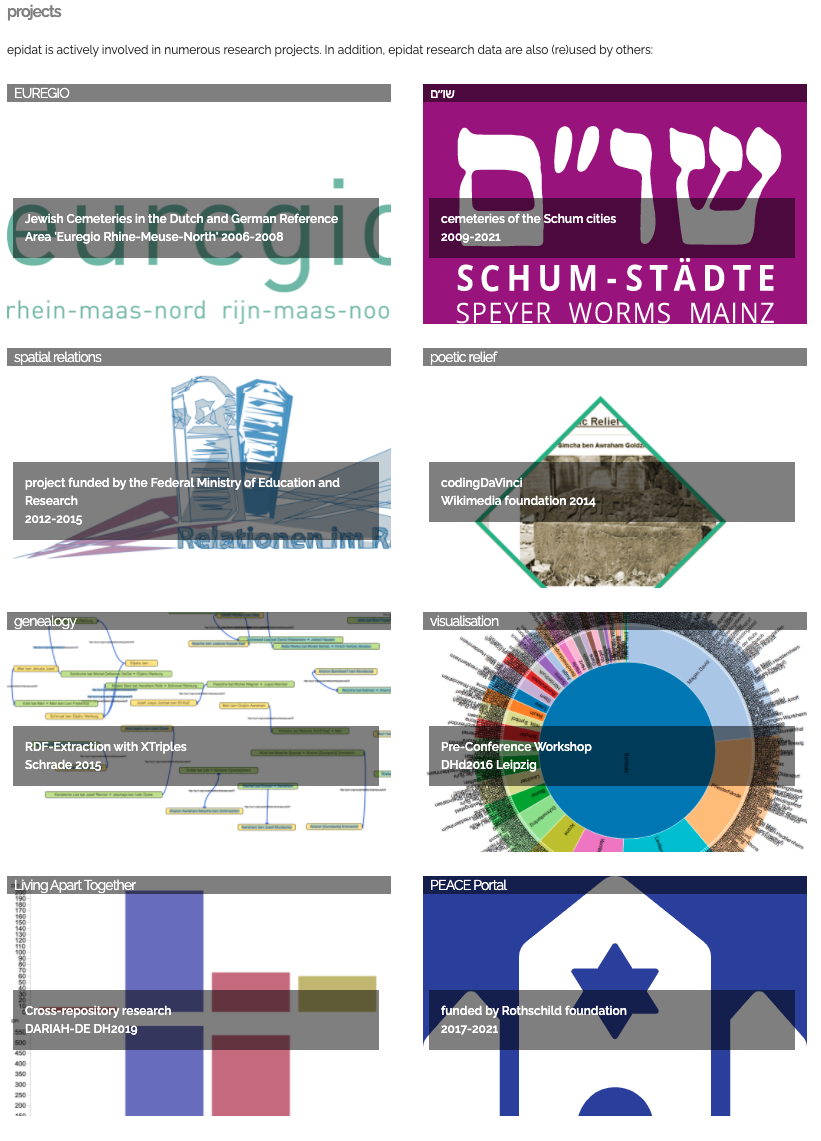
RiR-project 2012-2015 | template: Howto make a dynamic map
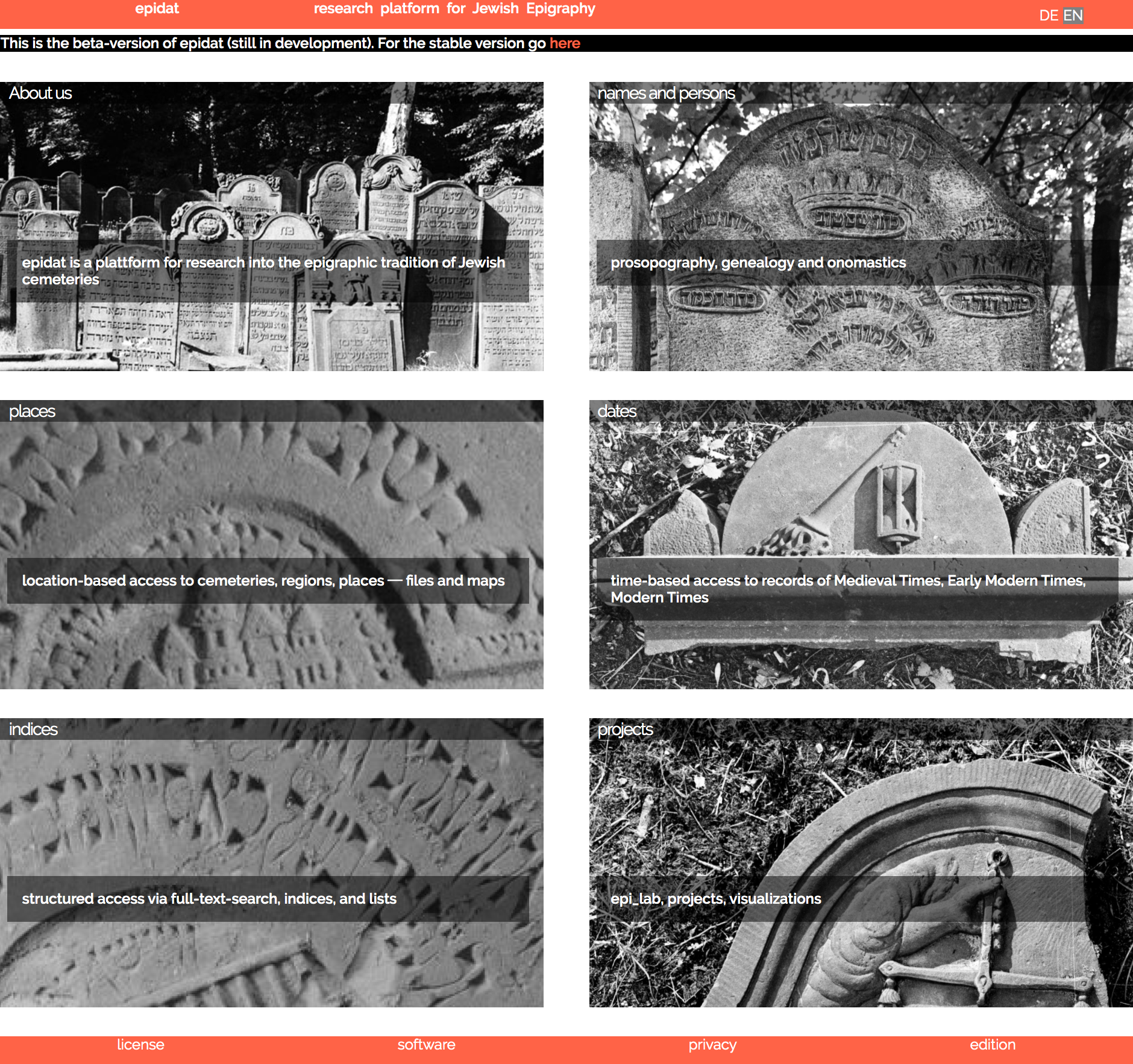
Research Platform for Jewish Epigraphy
| headstones | 43,816 |
| images | 79,972 |
| places – cemeteries | 233 |
| names – personal data records | 49,231 |
| dates (days) | 29,490 |
| timespan | 1040-1951 |
| countries | 6 |
start page (beta, 2021-12-09)
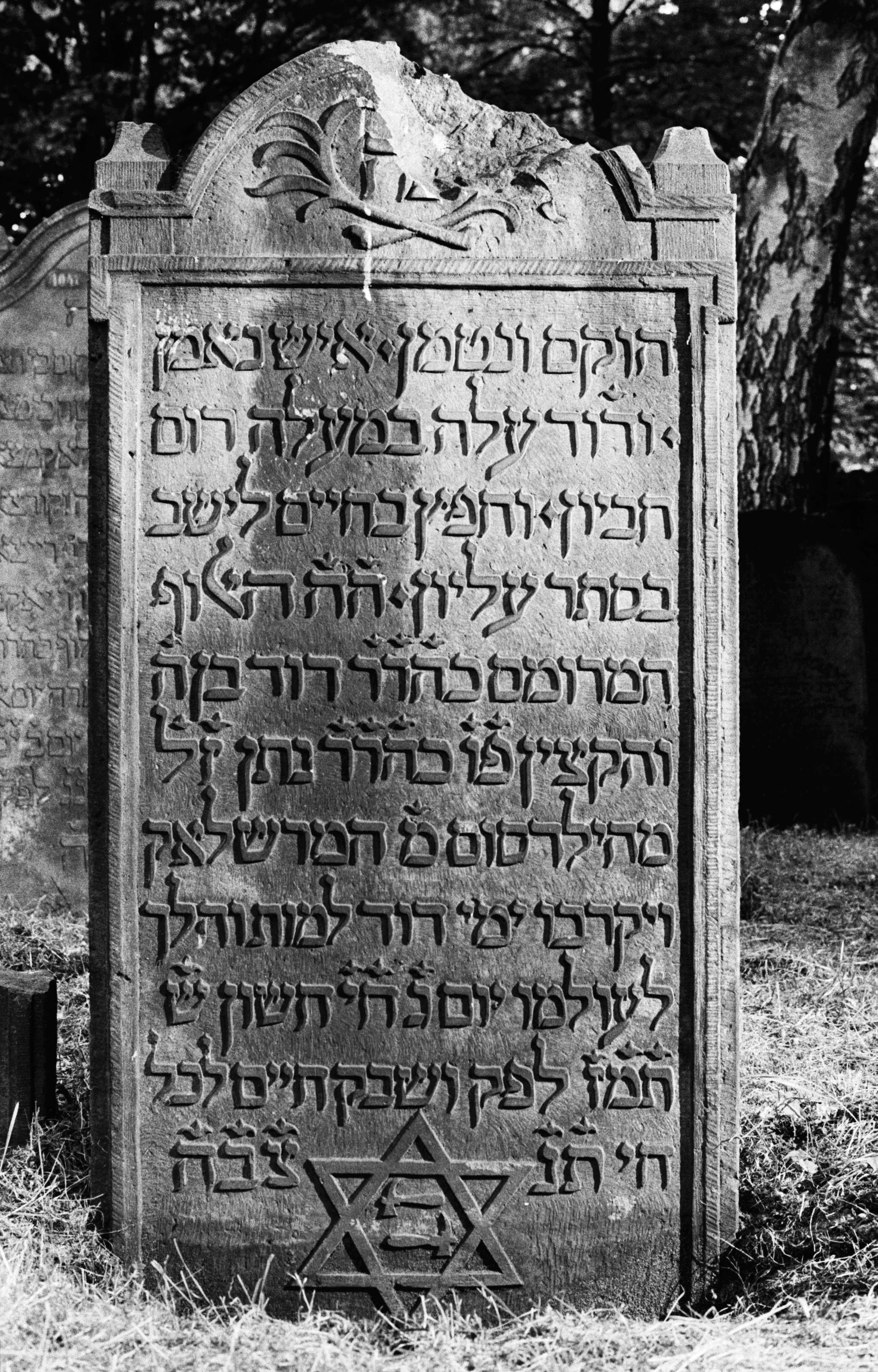
Hamburg hha-2338, David Hammerschlag
foto by Bert Sommer
from 43,816 a single example
- place of burial
- Hamburg
- name
- David Hammerschlag
- date_of_death
- 26.10.1686 | 18. Cheschvan 5447
- place of origin
- Hildesheim
- intertextuality
- Allusions on biblical David
- 2 Sam. 15:30 דוד עלה במעלה
- 1 Kings 2.1 ויקרבו ימי דוד למות
- ornaments
- palmette
- symbols
- magen david | hammer

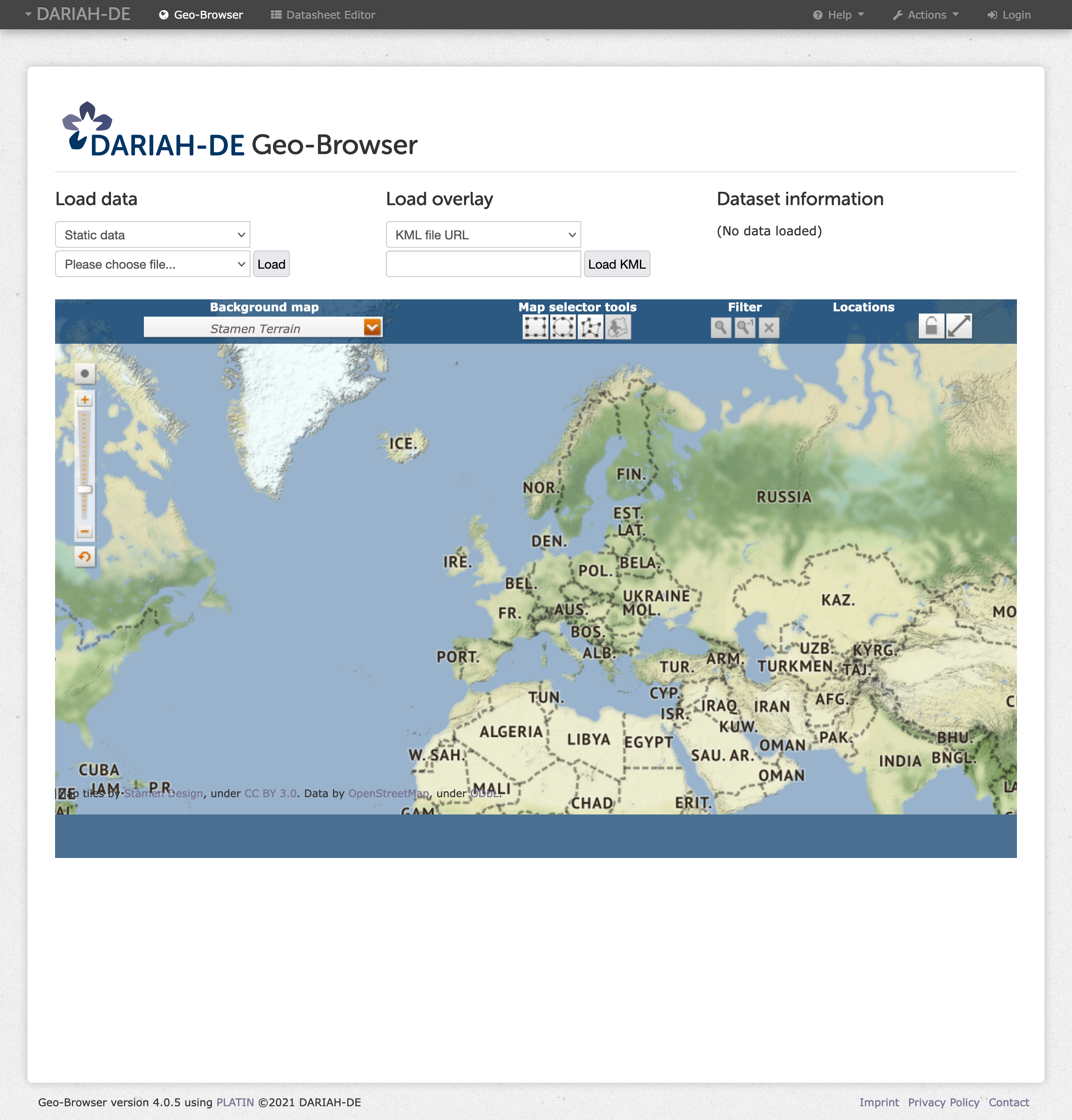
Geo-Browser
A web-based tool for analyzing and visualizing space-time relations of data and source collections.
DARIAH-DE Tools and Services
functionality
The DARIAH-DE Geo-Browser allows a comparative visualization of several requests Thus, researchers can analyze space-time relations of data and collections of source material and simultaneously establish correlations between them.
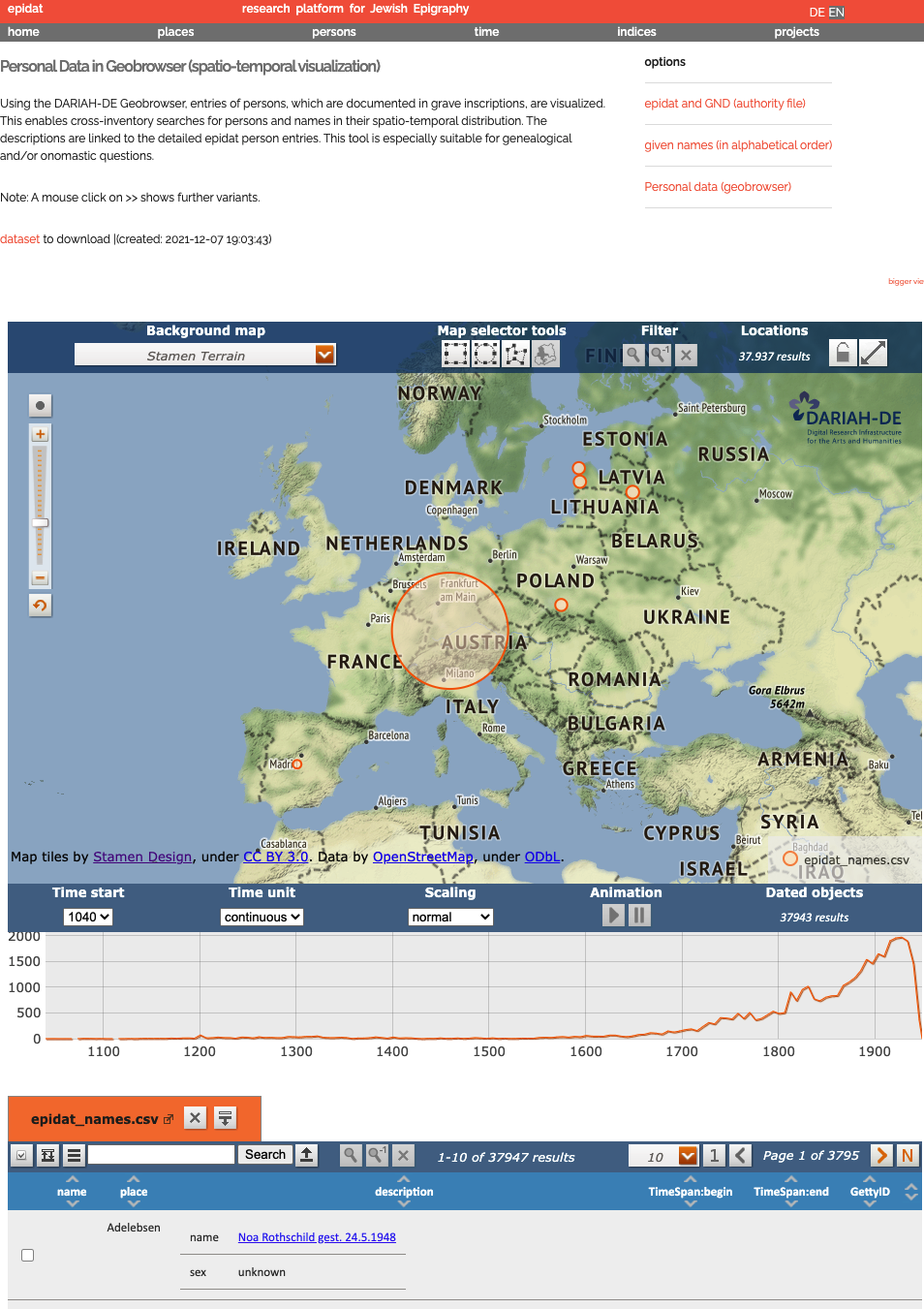
persons & names
entries of persons, which are documented in grave inscriptions, are visualized. This enables cross-inventory searches for persons and names in their spatio-temporal distribution. The descriptions are linked to the detailed epidat person entries. This application is especially suitable for genealogical and/or onomastic questions.
- dataset with 37,937 person entries (created: 2021-12-07 19:03:43)
- name
- sex
- link to person entry in epidat
Personal data and names on headstones epidat
Rise, Decline, and Renaissance of Kalonymos and Kalman
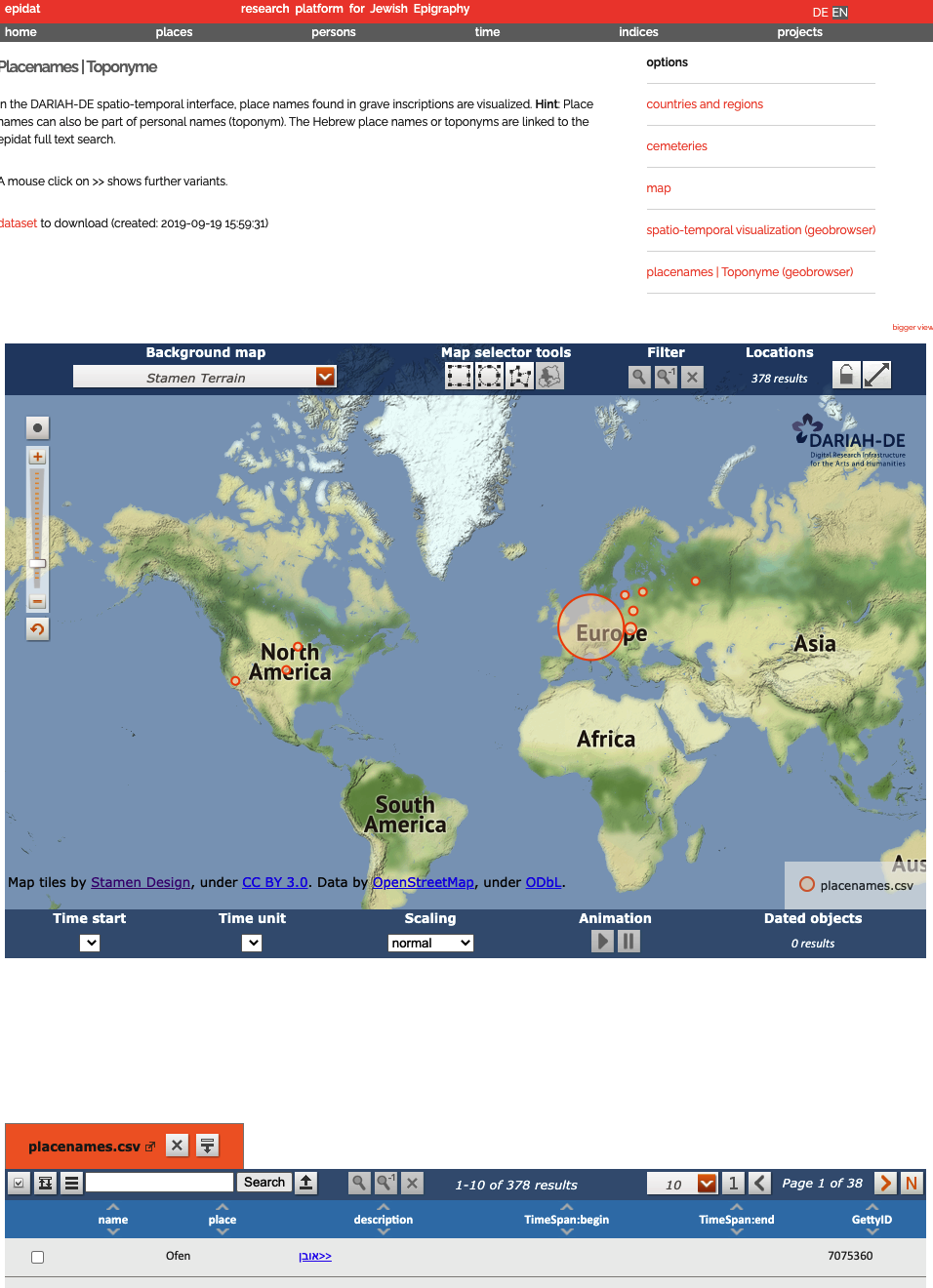
placenames | toponyme
place names found in grave inscriptions are visualized. Hint: Place names can also be part of personal names (toponym).
- dataset with 378 placenames
- without timeline
- Hebrew place names and toponyms are linked to the epidat full text search
- work in progress
Hebrew toponyms and placenames on headstones epidat
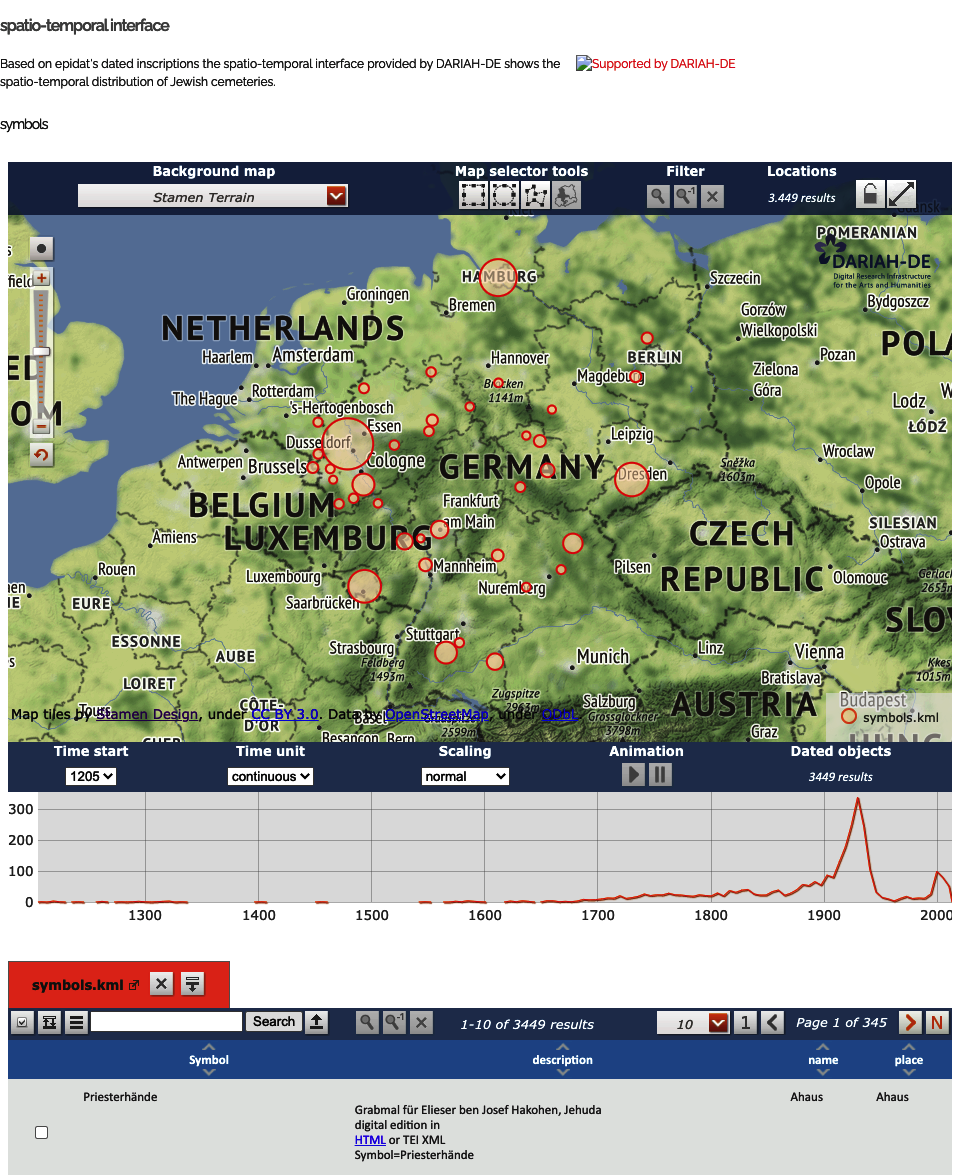
symbols
visualization of the temporal-spatial distribution of symbols used on gravestones of Jewish cemeteries.
- dataset with 3.449 records (created: 2015)
- possible research questions: search for
-
Symbol: Schmetterling(butterfly) -
Symbol: Lilie(lelies) -
Symbol: Magen David
-
symbols on headstones epidat
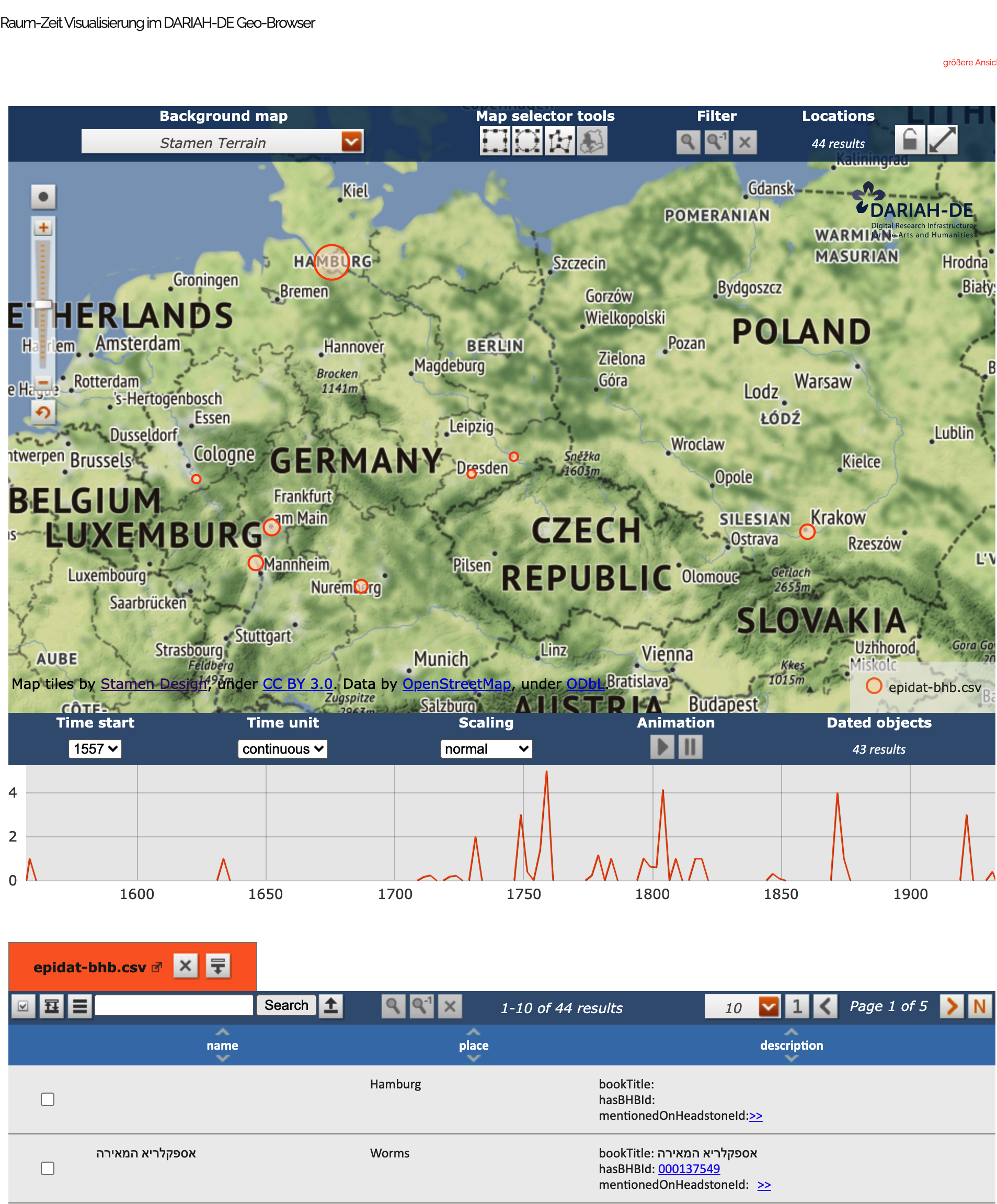
books
Particularly in the 18th and 19th centuries, it happens that epitaphs list books written by the deceased. From time to time, descendants also refer to books written by an ancestor. About 50 books are listed and presented in the spatiotemporal visualisation in the DARIAH-DE Geo-Browser.
- dataset with 44 records
- bookTitle
- Bibliography of Hebrew Book ID
- link to epidat record
- date of headstone
- role of deceased: author or descendant of author
books mentioned on headstones epidat
conclusion
- Databases, research repositories, Open Data and Open Access are important prerequisites for the continuous development of digital modes of presentation and digital tools.
- The providing of data, the linking between repositories as well as the use and application of differentiated tools enables a deeper understanding of the cultural heritage.
- It does no harm, if the development of software for the past is embedded in ongoing research projects
-